Why the type matters more than the brand name
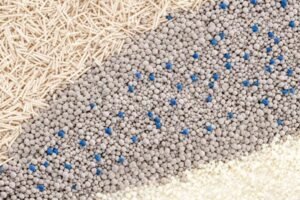
If you are spec’ing for a retail chain, a private label, or a regional distributor, the material type determines more than half of what the consumer will experience. The bentonite cat litter brands and clay cat litter brands you choose behave completely differently from the tofu cat litter brands and pine cat litter brands, even when both come off the same factory line.
This article breaks down the materials a buyer is most likely to encounter in 2026 RFQs, with the type-by-type performance notes you actually need to write a tender response.
Bentonite — the clumping workhorse
Sodium bentonite vs calcium bentonite
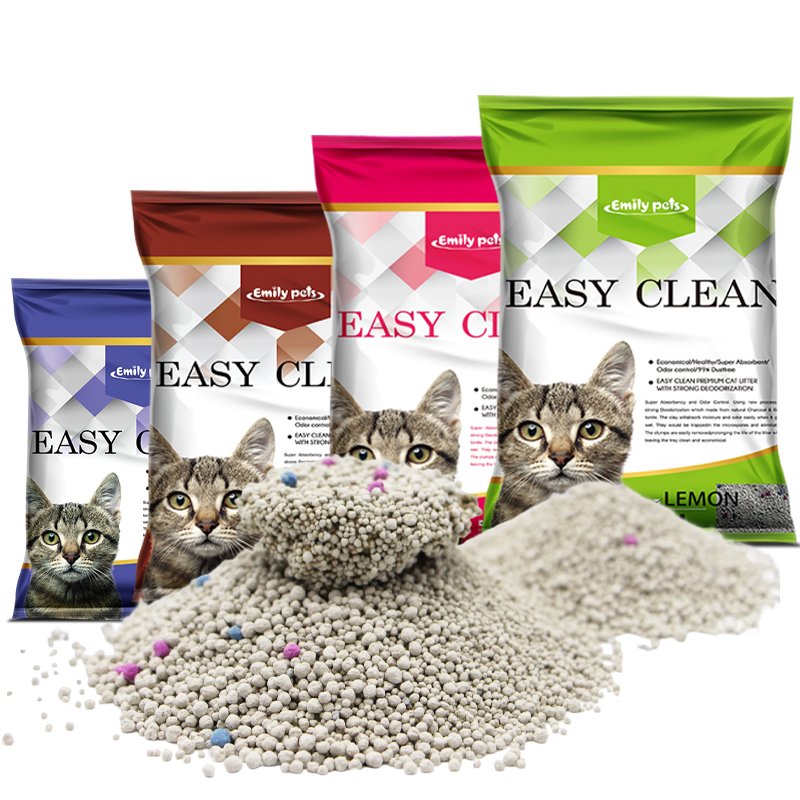
Bentonite is the dominant material in clumping cat litter globally, and the bentonite clay cat litter brands in 2026 RFQs fall into two main sub-types: sodium bentonite (the strong clumper) and calcium bentonite (weaker clumping, lower dust, often sold as a “natural” or “senior” line).
Sodium bentonite cat litter brands
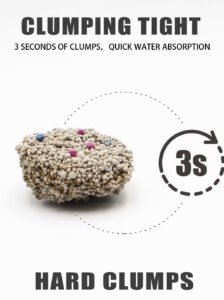
Sodium bentonite expands up to 15x its dry volume when wet, which is what creates the tight clump that defines the format. This is the type behind nearly every best clumping cat litter brand you have seen on a retail shelf. The performance grades we use internally at PY-PET for sodium bentonite:
| Grade | Sodium content | Typical clumping performance | Best for |
|---|---|---|---|
| Premium | ≥ 90% | Tight, hard clump; minimal breakage on scoop | Premium retail, multi-cat, hot climates |
| Standard | 85–90% | Solid clump; small breakage on heavy use | Mainstream retail, single-cat households |
| Value | 80–85% | Soft clump; some breakage on scoop | Price-led private label |
The best bentonite cat litter brands in our internal scoring run premium-grade sodium bentonite with controlled 1.0–3.5 mm granule distribution and tight moisture control at packing. Emily Pet and Cat Global both run on this recipe; Love Sand runs on the standard grade at a price-sensitive price point.
Why bentonite dominates wholesale
- Lowest per-kg cost of any clumping litter
- Longest shelf life (24+ months at proper moisture)
- Highest consumer recognition (“clumping” = “bentonite” in most buyers’ minds)
- Simplest supply chain (single mined raw material)
The two real downsides — mining footprint and non-flushability — are why every bentonite cat litter brand needs to be paired with at least one renewable line in a complete retail offer. PY-PET family brands handle this by putting tofu, cassava, and pine on the same factory.
Tofu — the eco-channel clumper
Best tofu cat litter brand — buyer-side criteria
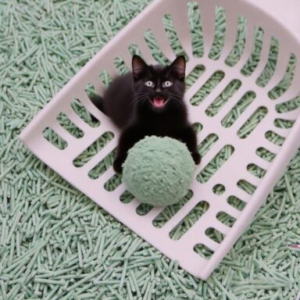
The tofu cat litter brands in the market are made from soy pulp (a byproduct of tofu / soy milk production). They clump, they flush in small volumes, and they cut the consumer’s “is this eco?” question at the shelf.
Best tofu cat litter brand — buyer-side criteria
For wholesale, the “best tofu cat litter brand” is not the one with the prettiest retail bag. It is the one with the lowest dust at pour and the most consistent granulation. The dust issue is real because tofu is a softer material than bentonite — it sheds a fine powder at the cut stage. Two supplier questions matter most:
- What is the PM10 dust reading at pour?
- What is the granule size tolerance? (Tighter tolerance = less fines = less dust.)
PY-PET’s tofu lines (across Emily Pet, Cat Global, and Love Sand) run on a multi-screen process that takes the typical PM10 down to the same range as a good low-dust bentonite. That is what makes them work for wholesale rather than just for the eco-channel shelf.
Tofu vs bentonite — when to spec which
| Scenario | Better choice | Why |
|---|---|---|
| Eco-channel retail (EU, UK, parts of MENA) | Tofu | Flushable, renewable, lighter per L |
| Mainstream retail with clumping focus | Sodium bentonite | Tighter clump, lower per-kg cost |
| Multi-cat household (warm climate) | Sodium bentonite with carbon | Strongest odor control |
| Vet clinic / post-surgical | Paper | Lowest tracking, easiest to monitor intake |
| Subscription / DTC | Tofu or pine | Lighter shipping weight, eco story |
| Hot / humid region (Middle East, SE Asia) | Sodium bentonite | Best moisture lock in high humidity |
Cassava — the crossover
Cassava-based litter has become the answer for buyers who want the eco story of tofu but a slightly harder clump. The PY-PET family lines (tapioca-based) sit in this crossover slot.
Where cassava works best
- Eco-channel retail where tofu clumping is considered too soft
- Markets where cassava is a recognized local raw material (parts of SE Asia, West Africa, Brazil)
- Buyers who want a “compostable” claim on the retail bag
Cassava’s main weakness is the same as tofu’s: a softer granule means more dust at pour unless the supplier runs a tight dedusting line. Confirm PM10 before PO.
Pine — the wood-based eco option
Pine formats and FSC documentation
Pine cat litter brands come in two formats:
- Wood pellets (compressed sawdust, FSC chain when properly sourced)
- Wood shavings / chips (loose, more absorbent than pellets)
Both work in the eco-channel and have a recognizable smell profile. The PY-PET pine line (Emily Pet main; Cat Global main; Love Sand main) uses FSC-traceable pine from certified suppliers, which matters in markets where FSC documentation is required for retail listing.
Pine for senior cats and post-surgery
The softer pellet texture and the natural pine scent make pine a strong fit for clumping cat litter brands for senior cats and for cats recovering from surgery — both cases where a clumping bentonite can be hard on paws. See also clumping cat litter brands for senior cat mobility — pine is consistently one of the top picks in our internal scoring for this category.
Clay (non-bentonite) — the legacy
The clay cat litter brands and clay based cat litter brands in 2026 RFQs are largely calcium-based clays or sepiolite, sold as non-clumping litter. They are the legacy format — cheap, dusty, and the lowest-clumping option — but still ordered in volume for two reasons:
- Industrial / farm use where cost dominates
- Markets with established consumer habits around non-clumping litter
PY-PET’s clay lines (under Emily Pet) target the latter — typically MENA and parts of South America where the consumer transition to clumping is still in progress.
Non-clumping cat litter brands for senior cats
The best non-clumping cat litter brands for senior cats are usually calcium bentonite (soft, low-tracking) or paper-based. Sodium bentonite is too aggressive on paws for cats with mobility issues; calcium bentonite or pine pellets are kinder. This is worth calling out separately in any retail pitch aimed at the senior-cat demographic.
Paper — for vet, hospitality, post-surgery
Paper-based cat litter brands are made from recycled paper pulp, formed into pellets. They are:
- Soft on paws
- Highly absorbent
- Almost dust-free
- Flushable in most systems
They are the standard pick for vet clinics, catteries, and hospitality (hotel cat rooms). The PY-PET paper line ships under Emily Pet’s secondary SKU set.
Mixed cat litter brands — the blended play
Mixed cat litter brands blend two or more materials — typically bentonite + tofu, or bentonite + pine — to get the clumping of one and the eco / scent profile of the other. The trade-off is that the blend has to be kept tight, otherwise the consumer gets inconsistent behaviour.
The PY-PET family offers a bentonite + tofu blend under Emily Pet’s premium range. The blend ratio is held in a tolerance window and verified per batch on the QC log. Ask for the blend ratio and tolerance before signing a multi-container contract.
Mineral and “new” cat litter brands
The mineral cat litter brands and new cat litter brands showing up in 2025–2026 RFQs include:
- Silica gel (crystal) litter — premium positioning, niche volume
- Walnut shell — limited markets, mostly North America
- Recycled glass — very small volume, sustainability story
- Grass / wheat blends — small but growing eco-channel SKU
These are worth tracking but, at current wholesale volumes, they sit below the 5% line. We list them for completeness rather than as primary recommendations.
Hypoallergenic and soft cat litter brands
Hypoallergenic cat litter brands and soft cat litter brands are usually unscented, low-dust, and made from materials that don’t shed fine particles. The most common base materials:
- Tofu (low dust at pour)
- Paper (low tracking, soft)
- Pine pellets (soft, natural scent)
- Calcium bentonite (less aggressive than sodium bentonite)
The PY-PET family covers this segment through the tofu, paper, and pine lines — with the unscented option spec’d in by default for the hypoallergenic SKU.
Cat litter sand brand — what the term actually means
“Cat litter sand brand” is a phrase that shows up in some regional search queries (notably in Latin America and parts of the Middle East). It refers to granular cat litter in general — not a specific material. If you see this term in a tender, clarify whether the buyer is asking for bentonite (the dominant “sand” type) or for actual silica sand (a niche product).
Putting it together: the material decision matrix
For a buyer building a private label catalog, the typical minimum set in 2026 is:
| Material line | Why you need it | PY-PET family SKU |
|---|---|---|
| Sodium bentonite (clumping) | Mainstream retail workhorse | Emily Pet, Cat Global, Love Sand |
| Tofu (clumping, flushable) | Eco-channel, light weight, subscription | Emily Pet, Cat Global, Love Sand |
| Cassava (clumping, eco) | Eco-channel with stronger clumping than tofu | Emily Pet, Cat Global, Love Sand |
| Pine / wood pellets | Wood-based eco, senior cat, vet | Emily Pet, Cat Global, Love Sand |
| Paper (recycled) | Hospitality, vet, post-surgery | Emily Pet secondary |
| Calcium bentonite (non-clumping) | Legacy markets, price-led | Emily Pet |
| Bentonite + tofu blend | Premium retail, dual-story | Emily Pet premium |
The PY-PET family covers all seven lines in one factory, which means a single supplier relationship, a single QC system, and a single set of export documents across the full material set.