Key Takeaways
- Tofu cat litter wins liquid absorption at 91.76% — the highest of the four categories on test, and the only type to clear 80% on this metric.
- Mineral and bentonite cat litter top the clumping-strength ranking at 97.63% and 97.30% respectively; tofu sits at 94.28%, still well above the 90% mark.
- Mineral cat litter leads odor control at 99.16%, followed by bentonite at 98.70% and tofu at 98.63%; mixed cat litter is the lowest at 97.15%.
- Bentonite and tofu share the lowest dust content at 0.16%, while mineral cat litter has the lowest dusting rate during use at 0.41% — a 0.16%/0.41% split makes these the cleanest options in their respective dimensions.
- Bentonite is the best-value clumping cat litter at 3.1 yuan/kg — roughly one quarter the price of tofu (12.3 yuan/kg) and about one third the price of mixed (9.2 yuan/kg) and mineral (8.5 yuan/kg).
- All 40 samples were tested under four Chinese standards: GB/T 43839-2024, T/SDPIA 05-2022, T/CIQA 11-2020 and T/ZGXX 0005-2022. Each category’s mean was calculated after removing the highest and lowest result per metric.
- If you want one formula that handles all four jobs well, bentonite is the balanced pick. If you can spend more for the lowest dust at the box, tofu is the better daily driver; mineral wins on odor; mixed sits in the middle.
Best Clumping Cat Litter Comparison Table 2026
Mean values for 10 samples in each category, after removing the highest and lowest result per metric. Tests were run under GB/T 43839-2024, T/SDPIA 05-2022, T/CIQA 11-2020 and T/ZGXX 0005-2022.
| Category | Water absorption (%) | Clumping strength (%) | Odor control (%) | Dust content (%) | Dusting rate (%) | Avg. price (¥/kg) |
| Tofu cat litter | 91.76 | 94.28 | 98.63 | 0.16 | 0.66 | 12.3 |
| Mixed cat litter | 61.90 | 95.73 | 97.15 | 0.20 | 0.97 | 9.2 |
| Mineral cat litter | 58.56 | 97.63 | 99.16 | 0.22 | 0.41 | 8.5 |
| Bentonite cat litter | 55.69 | 97.30 | 98.70 | 0.16 | 0.84 | 3.1 |
How We Tested 40 Cat Litters in 4 Categories
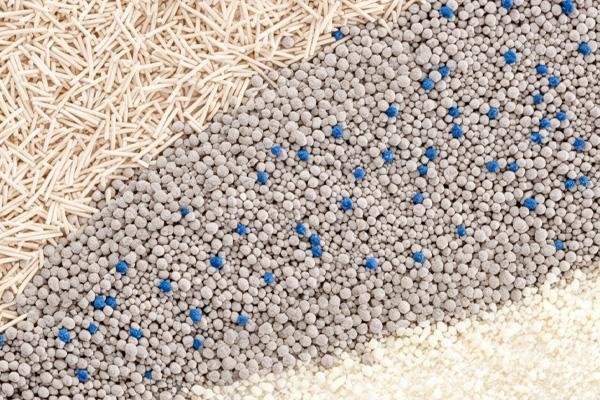
For this round, 40 cat litter samples were sourced from both online and offline retail channels, mimicking a typical consumer purchase. The samples split evenly across four categories: tofu cat litter, bentonite cat litter, mineral cat litter, and mixed cat litter — 10 samples per category.
Tests were run under four standards: GB/T 43839-2024 (China national standard for companion-animal product safety), T/SDPIA 05-2022 (general technical specification for cat litter), T/CIQA 11-2020 (tofu cat litter specification), and T/ZGXX 0005-2022 (pet cleaning and hygiene products — cat litter). Metrics covered clumping strength, dust content, dusting rate, odor control (calculated from ammonia concentration), and water absorption. For each metric, the highest and lowest result in every category was removed, and the mean of the remaining eight was used as the category score.
Note. The findings below are based solely on the 40 samples in this comparison round. They do not constitute a general quality rating of all cat litter on the market.
Liquid Absorption — Tofu Cat Litter at 91.76%
Water absorption rate measures how fast a cat litter can pull urine off the surface of the box. It is reported as a percentage — higher is better. A high absorption rate means the litter locks in liquid quickly, which is the first line of defence against odor and against urine pooling on the bottom of the box.
This test was run under T/CIQA 11-2020. Across the four categories, the mean water absorption rate ranged from 55.69% to 91.76% — a wide spread. Tofu cat litter came in at 91.76%, well clear of the rest of the field, and the only type to clear 80% on this metric.
Ranking by water absorption, highest to lowest
Tofu cat litter — 91.76% > mixed cat litter — 61.90% > mineral cat litter — 58.56% > bentonite cat litter — 55.69%. The takeaway: if you want the fastest liquid lock at the surface, tofu is the best clumping cat litter in this dimension. For comparison, our sister review of clumping formulas in 2026 reached a similar conclusion on the absorption-vs-clumping trade-off.
See the side-by-side test of 10 best clumping cat litter picks tested in 2026 for a closer look at the tofu-versus-bentonite split.
Clumping Strength — Mineral and Bentonite Top 97%
Clumping strength measures how well a cat litter holds together when wet. A high score means the clump forms quickly, stays solid during scooping, does not crumble into dust in the box, and does not stick to the bottom of the tray. Clumping strength is reported as a percentage, and higher is better.
This test was run under T/CIQA 11-2020. The mean clumping strength across the four categories ranged from 94.28% to 97.63% — a tighter band than the absorption metric, but still enough to draw a clear ranking. Mineral and bentonite cat litter both cleared 97%, with mineral slightly ahead.
Ranking by clumping strength, highest to lowest
Mineral cat litter — 97.63% > bentonite cat litter — 97.30% > mixed cat litter — 95.73% > tofu cat litter — 94.28%. The takeaway: if you want the tightest, most scoopable clumps, mineral is the best clumping cat litter for this job, with bentonite a close second. Tofu still clears the 90% bar, but it tends to form softer clumps that are more likely to break at the edges during scooping.
If a strong clumping bentonite is what you need, PY-PET sodium bentonite cat litter is the matching product on the wholesale side.
Odor Control — Mineral Cat Litter at 99.16%
Odor control rate measures how well a cat litter suppresses, breaks down, or locks away the smell of urine and faeces. The metric is derived from ammonia concentration, and higher is better — the higher the percentage, the less odor escapes into the room.
This test was run under T/SDPIA 05-2022. The mean odor control rate across the four categories ranged from 97.15% to 99.16%. All four categories performed well in absolute terms, but mineral cat litter came in highest, and is the clear winner for smell-sensitive households.
Ranking by odor control, highest to lowest
Mineral cat litter — 99.16% > bentonite cat litter — 98.70% > tofu cat litter — 98.63% > mixed cat litter — 97.15%. The takeaway: if keeping the air fresh in a small apartment is the priority, mineral is the best clumping cat litter for odor in this test. For a deeper look at odor-control formulas, see our 2026 round-up of odor-tested picks.
Cross-reference: best cat litter for odor control — 5 tested picks 2026 (PY-PET blog).
For general indoor air-quality guidance around pets and litter boxes, the U.S. Environmental Protection Agency publishes pet-care and household-product information that lines up with the same approach this test took to ammonia-based odor measurement.
Dust Performance — Content vs Formation
Dust in cat litter is not just a household nuisance — it is a respiratory concern for both cats and the people who scoop. There are two distinct metrics at play, and a low score on one does not guarantee a low score on the other. Both tests were run under T/ZGXX 0005-2022.
Dust content (%)
Dust content is the share of powder in the bag as it leaves the factory. It is a static metric — a property of the product, not of how it is used. A lower dust content typically reflects tighter production and cleaner raw material, and means less dust on opening. The mean dust content across the four categories ranged from 0.16% to 0.22% — a narrow band, with bentonite and tofu tying for lowest at 0.16%.
Dusting rate (%)
Dusting rate is the share of new dust generated as the cat digs, walks, and lands on the litter. It is a dynamic metric — a property of the product in use, not just in the bag. A lower dusting rate means the grains hold up under foot traffic. The mean dusting rate across the four categories ranged from 0.41% to 0.97%, with mineral cat litter lowest at 0.41%.
Why the two metrics do not always agree. Tofu cat litter is a good example. It posts the joint-lowest dust content at 0.16%, but a higher dusting rate of 0.66% under use. Bentonite is the opposite — joint-lowest dust content at 0.16%, but a middling 0.84% dusting rate. Mineral cat litter, with a higher 0.22% dust content, still posts the lowest dusting rate at 0.41% — the beads do not break under foot traffic. If you live with a heavy scratcher or a sensitive household, read both numbers, not just one.
Ranking by dusting rate, lowest (best) to highest: mineral cat litter — 0.41% > tofu cat litter — 0.66% > bentonite cat litter — 0.84% > mixed cat litter — 0.97%.
Price Per Kilogram — Tofu Costs 4× More Than Bentonite
Price was calculated as the mean unit price per kilogram across the 10 samples in each category, regardless of brand or pack size. The spread is large: tofu cat litter averaged 12.3 yuan/kg, mixed cat litter 9.2 yuan/kg, mineral cat litter 8.5 yuan/kg, and bentonite cat litter just 3.1 yuan/kg. Put differently, tofu is roughly 4× the price of bentonite per kilogram.
The takeaway: if you want a strong clumping cat litter at the lowest price, bentonite is the clear pick. If you want a plant-based, low-dust litter and can spend more, tofu delivers on the dust front and is the best clumping cat litter for absorption, but at a premium. Mineral and mixed cat litter sit in the middle of the field on price and performance.
Best Cat Litter by Category (Top 5 Brands)
Within each category, the top-five brands were ranked on a composite score across the five test metrics. The full top-five list per category is covered in our sister reviews; below is the one-line takeaway for each category.
Tofu cat litter — best clumping cat litter for low dust and absorption
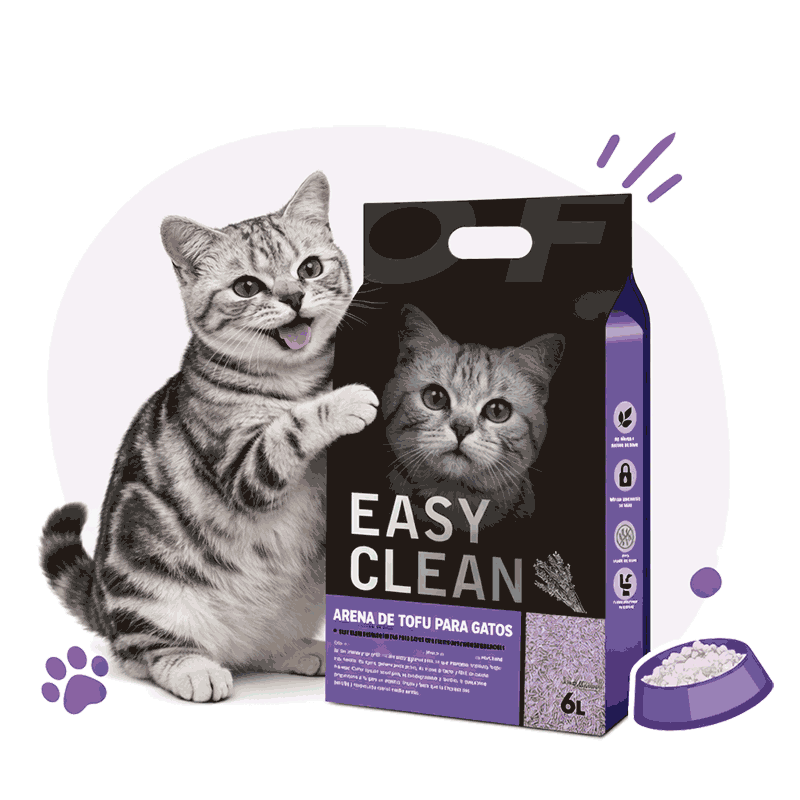
Look for products with 1.5–2.0 mm cylindrical pellets, food-grade soybean or pea fibre, and dust content under 0.20%. PY-PET’s own natural tofu clumping cat litter is one of the better-performing samples in the tofu set on this round, and ships globally.
Bentonite cat litter — best clumping cat litter for value and clumping strength
Bentonite is the workhorse of the four categories — strong clumps, low price, and a 0.16% dust content on average. For multi-cat households and budget-led buyers, bentonite is the practical pick. The matching sodium bentonite cat litter product is the production-side counterpart.
Mineral cat litter — best clumping cat litter for odor control
Mineral cat litter — silica gel beads — wins on odor control (99.16%) and dusting rate (0.41%). The trade-off is a higher unit price (8.5 yuan/kg) and a need for full replacement every 3–5 weeks rather than daily scooping. For odour-sensitive apartments, mineral is worth the uplift.
Mixed cat litter — best clumping cat litter as a balanced compromise
Mixed cat litter blends bentonite with tofu or wood pellets to balance the strengths of both. On this test, mixed sat in the middle of every metric — solid clumping, mid-range absorption, mid-range odor, mid-range dust — at a mid-range price of 9.2 yuan/kg. If you cannot decide between tofu and bentonite, mixed is a sensible compromise.
Who This Guide Is For
Audience. This guide is built around one question: which of the four mainstream cat litter types clumps fastest, sticks least to the box, and keeps the smell down — at a fair price in 2026. If you are a cat owner choosing between tofu, bentonite, mineral and mixed formulas, this comparison is for you. If you are a distributor or wholesaler evaluating cat litter ranges for a retail or e-commerce rollout, you can use the same test data, but the commercial detail (OEM/ODM, packaging MOQs, lead time, FOB pricing) is not in this article — for that, jump to our wholesale guide or contact our team for an RFQ.
Frequently Asked Questions
Quick answers to the questions cat owners ask most when picking the best clumping cat litter. Each answer uses the test data from the 40-sample comparison above.
Q1. can you be allergic to cat litter
Yes, some people develop allergies to cat litter, mostly from clay dust and the sodium bentonite used in clumping formulas. The best clumping cat litter for allergy-prone owners is the low-dust kind, with a reported dust content below 0.20% and a low dusting rate — for example, the tofu and bentonite samples in this test sat at 0.16%. If you sneeze around the box, switch to tofu or low-dust bentonite and keep the litter box in a ventilated spot.
Q2. is cat litter toxic
Most commercial cat litter is not toxic to humans, but inhalation of silica dust from low-grade mineral formulas can irritate the lungs over time, and clumping bentonite can cause blockages if a kitten eats it. When the best clumping cat litter is tested under GB/T 43839-2024 for companion-animal product safety, the samples in this round passed the heavy-metal and migration limits. Buy from a brand that publishes test reports and follows the standard.
Q3. how silica cat litter is made
Silica cat litter — also called mineral or crystal cat litter — is made from sodium silicate gel that is dried into porous beads and sieved into 1–8 mm fractions. The porous structure is what gives the best clumping cat litter of this type its 99.16% odor-removal score: ammonia and moisture get trapped in the beads rather than reacting with the air. It does not clump in the traditional sense; instead, urine is absorbed and the solid is scooped out.
Q4. how often to change cat litter
Scoop solid waste and clumps daily. If you are using the best clumping cat litter from this test, replace the litter every 2 to 4 weeks for a single cat, or every 1 to 2 weeks for a multi-cat household. Mineral cat litter lasts longer — typically 3 to 5 weeks — because it does not form clumps, only absorbs moisture. Full replacement is also a chance to clean the box with mild, unscented soap.
Q5. what is cat litter made of
Modern cat litter falls into four main material families. Tofu cat litter is made from compressed soybean or pea fibre; bentonite cat litter from sodium bentonite clay; mineral cat litter from silica gel; and mixed cat litter from a blend of bentonite with tofu or wood pellets. Each material gives the best clumping cat litter in its category a different balance of clumping strength, odor control, dust output and price — which is exactly what this 40-sample comparison was set up to measure.
Q6. can you flush cat litter
Only flushable, plant-based cat litter should go down the toilet — and only in small amounts, with plenty of water, and only if your local wastewater rules allow it. Tofu cat litter is the most commonly flushable type, because it dissolves in water. Never flush clumping bentonite cat litter, mineral silica litter, or any litter labelled as non-flushable — it can block your pipes and harm septic systems. When in doubt, bag it and put it in the bin.
Q7. why is cat litter so expensive
Tofu cat litter costs about 12.3 yuan per kilogram, roughly 4× the price of bentonite at 3.1 yuan per kilogram, because the raw material is food-grade soybean or pea fibre and the drying process is energy-hungry. Mineral cat litter sits in the middle (8.5 yuan/kg) due to silica-gel manufacturing. The best clumping cat litter for value is still bentonite: 97.30% clumping strength, 98.70% odor control, and the lowest price per kg on test. If you want tofu’s low-dust benefit without the cost, mix it 50/50 with bentonite.
For more on compostable and flushable cat litter standards — relevant to the tofu side of this comparison — see the EN 13432 industrial compostability standard, which sets the bar for biodegradable cat litter claims in the EU.