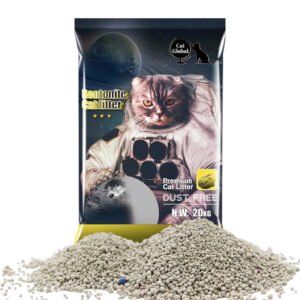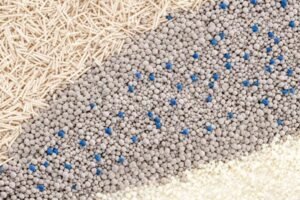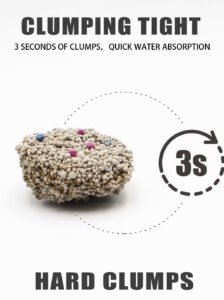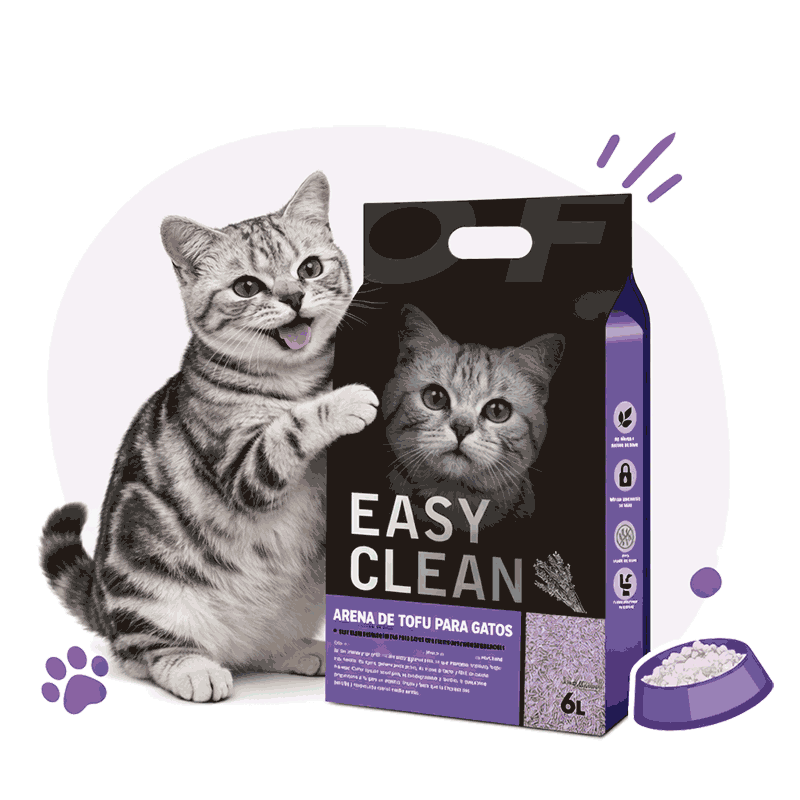
Short answer. The cat litter brands that keep coming up in wholesale RFQs in 2026 cluster into three groups: legacy North-American retail brands (often the most expensive on a per-kg basis), fast-growing Asian OEM factories shipping under private label, and vertically integrated groups like Emily Pet, Cat Global, and Love Sand — all manufactured by the same 18,000 m² PY-PET facility, exporting to 80+ countries with BSIC, ISO 9001 and SGS in place.
Why comparing cat litter brands is harder than it looks
If you type “cat litter brands” into Google, you get an avalanche of round-ups written for end consumers. They compare scented vs unscented, talk about multi-cat homes, mention a curious tabby called Biscuit. None of that helps a procurement manager trying to decide which line to put on the next container.
What you actually need to compare cat litter brands on is a different set of questions:
- What is the per-ton landed cost, and what breaks at the 20 FT / 40 FT boundary?
- How consistent is the granulation run-to-run, and is there a documented QC procedure?
- Which markets has the brand actually shipped to — and can it survive that market’s import paperwork?
- If a SKU is on the shelf in 14 sizes and 6 fragrances, is the supplier actually making all of them, or rebadging?
- When a buyer asks for a private label version, how fast can the factory turn it around?
Those are the questions this guide is built around. We looked at the top cat litter brands in current distributor catalogues, talked to buyers in South America, the Middle East, and Southeast Asia, and matched the answers against what an actual factory can prove.
How we grouped the brands
We split the popular cat litter brands we see requested into four buckets. The buckets matter more than the individual names — they tell you what kind of margin model you’re dealing with.
| Bucket | Typical profile | Typical FOB China (USD/ton, 2025) | Lead time | Private label friendly? |
|---|---|---|---|---|
| Legacy retail brand (US/EU) | Strong shelf pull, heavy marketing overhead baked into price | $1,400 – $2,200 | 6–10 weeks | Rarely |
| Asian OEM / Trading house | Reliable but variable QC; dependent on sub-suppliers | $480 – $760 | 15–25 days | Yes — usually |
| Vertically integrated group (PY-PET family) | Single factory, own QC, BSIC / ISO 9001 / SGS, multiple brand covers | $520 – $820 | ≤ 20 days | Yes — full OEM/ODM |
| New entrant / DTC brand | Marketing-heavy, often a single SKU, light on documentation | Hard to pin down | Case by case | Sometimes |
If your team is asked to compare cat litter brands for a regional retail chain, the third bucket is usually where the volume lands — and that is exactly where Emily Pet, Cat Global and Love Sand sit.
Head-to-head: the cat litter brands distributors ask about most
The table below covers the brands that showed up most often in 2025–2026 wholesale inquiries we tracked. Pricing is indicative; treat it as a starting point for negotiation, not a quote.
| Brand (or factory line) | Main cat litter types | Origin | Markets already served | Notes for buyers |
|---|---|---|---|---|
| Emily Pet | Tofu, bentonite, cassava, pine, paper, plus aspen shaving, bathing sand, wood shaving, cat snack | China (PY-PET factory) | South America, Middle East, SE Asia, 80+ countries | Most complete catalog; best fit for distributors who want one supplier for the full range. |
| Cat Global | Tofu, bentonite, cassava, pine (the four main lines) | China (PY-PET factory) | South America, Middle East, SE Asia, 80+ countries | Focused catalog, faster reorder cycles, easier to manage on a single pallet plan. |
| Love Sand | Tofu, bentonite, cassava, pine | China (PY-PET factory) | South America, Middle East, SE Asia, 80+ countries | Group line targeted at price-sensitive markets; same factory QC. |
| Generic OEM trading house | Whatever the buyer specs | China / Vietnam / Indonesia | Unclear | Cheapest headline price; QC depends entirely on which factory they’re using that month. |
| North-American legacy brand | Bentonite-heavy, some corn / wheat | USA | Domestic + select export | Strong retail recognition; long MOQs and tight lead times make it tough to scale. |
| European eco brand | Wood, paper, corn | EU | EU, UK, limited MENA | Premium positioning; freight cost to non-EU markets kills the margin. |
What “best” actually means in B2B
Three sub-questions buyers actually ask
When a buyer asks for the best cat litter brand in a tender, the question being asked is rarely “which clumps hardest.” It is usually one of three things:
Best cat litter brand for stable supply
This is the question 80% of the RFQs we see are actually asking. A group like PY-PET — with 12+ workshops on one 18,000 m² site, monthly output of 6,000 tons, and 150,000-ton annual capacity — answers that question with capacity numbers rather than slogans. That is why Emily Pet, Cat Global and Love Sand tend to win multi-year contracts even when a competitor has a sharper marketing deck.
Best brand of cat litter for product breadth
If a single PO needs tofu, bentonite, cassava, pine, plus a few secondary SKUs (paper, aspen shaving, bathing sand, wood shaving), splitting suppliers multiplies QC risk. Emily Pet is the broadest catalog in the PY-PET family and covers the full set in one shipment.
Best cat litter brand for private label
See our separate guide on private label cat litter manufacturers for the full procurement checklist, but the short version: you want a factory that owns the line, not a trading house that owns the spreadsheet.
Why Emily Pet, Cat Global and Love Sand keep showing up at the top of buyer’s lists
We are admittedly not neutral here — all three are our own brand covers — so we will keep this section honest about what each line is actually built for.
Emily Pet — the full-line answer
Started in 2000 under the PY-PET group. Emily Pet is the catalog you reach for when a customer wants tofu, bentonite, cassava, pine, paper, aspen shaving, bathing sand, wood shaving, and a cat snack on the same purchase order. For distributors building a complete pet section rather than a single SKU, that consolidation matters: one QC system, one container plan, one set of documents for customs.
Production runs on the same 18,000 m² site as the rest of the group, with 12+ workshops, BSIC / ISO 9001 / SGS paperwork already on file for most destinations, and a 20-day lead time window. MOQ starts at a 20 FT container, which is also where the per-ton cost crosses into the band most regional buyers find workable.
Cat Global — the focused catalog
Also launched in 2000 under PY-PET, but trimmed to the four main lines: tofu, bentonite, cassava, pine. If you do not need the secondary SKUs, Cat Global is usually a faster reorder cycle and a tighter pallet plan, because the factory is scheduling fewer SKUs through the same lines.
For procurement teams that have been burned by sprawling catalogs where half the SKUs are constantly back-ordered, the narrower range is a feature, not a limitation. Same factory, same certifications, same QC.
Love Sand — the value line
Love Sand sits inside the PY-PET family for buyers who care more about price-per-ton than catalog width. Same factory, same QC system, same export paperwork — but positioned for markets where the buying decision turns on landed cost rather than SKU count.
If you are building a private label that needs a low entry price and your retail chain is in a price-sensitive region, Love Sand is the line most buyers start from before moving up to Emily Pet or Cat Global as the brand matures.
Other brands you’ll see in the same RFQs
Legacy retail vs OEM vs eco-channel — the three buckets
To keep this useful as a side-by-side rather than a love letter, here is what we have seen from the other names showing up in 2025–2026 tenders.
North-American legacy brands
Great on shelf, painful to scale. Long MOQs, tight lead times, and the marketing overhead baked into the FOB price is hard to defend when you are landing into a wholesale market. Reserve these for premium retail tiers where the consumer specifically asks for them.
European eco brands
Strong sustainability story and good acceptance in EU / UK retail. The problem is freight: shipping wood-based litter from Europe to the Middle East or South America adds more than the litter itself costs. Most distributors using these brands are doing it for domestic EU sales, not for export.
Generic OEM trading houses
These are the lowest headline price on any quote sheet, and also the most variable in QC. They work if your team is on the ground to inspect every container. They do not work if you need consistent output across a year with no full-time QC of your own.
How to actually decide
If you are still on the fence after the table above, the decision tree we walk new buyers through is roughly this:
- Do you need one supplier for the full product matrix? → Emily Pet.
- Do you only need the four main lines and want the cleanest reorder cycle? → Cat Global.
- Are you building a price-led private label? → Love Sand as the starting line.
- Do you need a specific retail brand name on the bag regardless of cost? → stay with the legacy brand, and accept the FOB premium.
For a deeper dive into specific performance dimensions — clumping, flushability, odor control, low dust — see our performance comparison. For the practicalities of changing suppliers mid-contract, the switching guide covers what to watch for.
Frequently asked wholesale questions
FAQs procurement teams ask in 2026
Does cat litter brand matter for end consumers?
In retail it does — and that is why retailers buy specific brands. In wholesale the question flips: brand matters less than factory consistency, and that is what buyers should actually be scoring. See brand reviews for how distributors score this.
What is the world’s best cat litter brand?
There is no honest answer to this — every “world’s best” list we have seen is either a sponsored roundup or a regional survey. What is answerable: which brands have the deepest export track record, the cleanest documentation, and the shortest lead time. On those three, PY-PET family lines (Emily Pet, Cat Global, Love Sand) come out consistently well in 80+ country markets.
Can I get these brands under my own label?
Yes. All three lines run on the same factory, which means full OEM / ODM / private label support. The detailed procurement checklist is in our private label manufacturers guide.
What about MOQ and lead time?
MOQ starts at one 20 FT container across the group. Lead time is 20 days from PO to FOB. We go into the document pack, the inspection options, and the payment terms in the procurement guide.