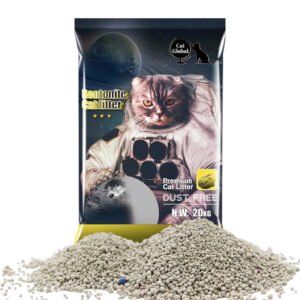
Switching cat litter brands is fine — it is done every quarter at the wholesale level — but it needs a transition window. The blend ratio matters more than the brand switch itself: jumping straight from 100% Brand A to 100% Brand B in a single shipment causes the kind of consumer complaints that get a retail buyer on the phone. A 7–10 day blend-in window keeps the box behaviour consistent and is the single biggest factor in a clean switch.
Why this question is asked more by distributors than by end consumers
Most consumer blogs frame “can you change cat litter brands?” as a behavioural question about cats. For wholesale, it is a procurement question about supplier change. The dynamics are very different:
- The “cat” in this case is a chain store with a regional buyer whose contract renewal is due in 90 days.
- The “litter box” is a 20 FT or 40 FT container system with a payment schedule.
- The “transition window” is the time between the last PO on Brand A and the first consumer complaint on Brand B.
The rest of this guide uses that framing.
The four questions every supplier switch raises
1. Does cat litter brand matter to the end consumer?
It does — but less than the brand on the bag suggests. In retail return-rate data we have seen across the PY-PET family markets (South America, Middle East, Southeast Asia), the variance between two clumping bentonite lines from two different factories is usually smaller than the variance between two batches of the same factory line. Brand matters at the point of purchase (recognition, trust, repeat). Performance varies more by factory than by label.
If you want a deeper dive on whether the consumer-side differences justify a premium, the distributor review roundup has the practical scorecards.
2. Is it bad to change cat litter brands?
It is bad to change suddenly. It is not bad to change deliberately. Most consumer complaints after a brand switch come from one of three causes:
| Cause of complaint | Why it happens | How to prevent |
|---|---|---|
| Sudden scent change | New brand has a stronger or different fragrance load | Order an unscented variant first; check fragrance level on the SDS |
| Sudden texture change | New brand uses a different granule size | Match granule size (1.0–2.5 mm vs 2.5–4.0 mm); blend if necessary |
| Sudden performance drop | New brand has lower sodium bentonite content | Request the SDS and a recent QC run; test clump integrity before PO |
3. Can you mix cat litter brands?
Yes — and for any supplier switch above 5 tons per month, you usually should. A blended transition is the difference between a clean cutover and a complaint wave.
The standard blending schedule is:
| Day | Old brand | New brand | Notes |
|---|---|---|---|
| 1–3 | 70% | 30% | First consumer signal — watch social, email, retail returns |
| 4–6 | 40% | 60% | Clumping should stabilise; track complaint rate daily |
| 7–10 | 0% | 100% | Full cutover; keep one container of old brand on standby for 30 days |
4. How to change cat litter brands at the procurement level
This is the operational checklist. Use it for any supplier change above one container per month.
- Run a side-by-side sample test on the new brand — at least 5 kg, with a written report on clumping, dust, scent, granule size.
- Pull the SDS, QC log, and COA from the new supplier for the last three production batches.
- Confirm certifications match what your market needs (ISO 9001, BSIC for retail, SGS for certain customs lanes).
- Confirm MOQ and lead time against your reorder cycle. A 60-day switch window collapses if the new supplier’s lead time is 45 days on a 20 FT MOQ.
- Confirm packaging compatibility with your pallet plan, your retailer’s shelf footprint, and your barcode / EAN.
- Place a transition PO for ~30% of the new brand against your next order of the old brand. This is the blended window.
- Hold one container of the old brand for 30 days post-cutover for any retail recall needs.
What end consumers actually notice during a switch
Even though this guide is written for B2B, retail buyers ask us about consumer-side behaviour constantly. Here is what we tell them.
Scent drift
Scent is the single biggest consumer-side complaint trigger. If the old brand is scented (lavender, baby powder, green tea) and the new brand is unscented, or vice versa, expect the retailer to hear about it within 48 hours of shelf stocking. Solution: order the unscented variant first for the transition, then add the scented SKU after cutover.
Dust jump
A brand that switches from a clay-based line (higher dust) to a tofu-based line (lower dust) is usually received as a positive — but the inverse move (tofu to clay) often triggers “my house is dusty now” complaints for the first two weeks.
Clumping change
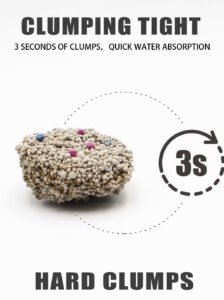
Clumping changes are noticed by long-time users but rarely by casual ones. If your retail channel is high-frequency (pet specialty, subscription), expect a small uptick in complaints on day 7–14 even with a smooth blend. Have a one-line consumer FAQ ready: “We’ve upgraded to a higher-clump formulation — same box, just tighter clumps.”
Tracking
Tracking (litter stuck to paws and carried out of the box) is more of a granule-size issue than a brand issue. If the new brand has heavier granules (typically the larger pine or paper pellets), tracking goes down. If the new brand has finer granules (clumping bentonite), tracking goes up. Match the granule size to the existing brand where possible.
Tips for changing cat litter brands — procurement edition
Ten practical tips from the supplier-change playbooks we have run for distributors in 2024–2026.
1. Never switch in the middle of a peak season
Avoid Q4 and any regional holiday window. Consumer tolerance for change drops sharply in peak season, and the retailer’s complaint-handling capacity is already stretched.
2. Run the new brand through your own QC first
Even if the supplier sends a COA, do your own clump test and dust test on a 5 kg sample. Trust, but verify.
3. Align bag and pallet specs early
Bag dimensions, pallet pattern, container utilization — these are the silent killers of a switch. Confirm them before placing the transition PO.
4. Update artwork on the same container
If you are running under private label, batch the artwork change with the supplier switch so the warehouse does not have two SKUs at once.
5. Brief your sales team with one sheet of facts
One page, ten bullets, sourced from your QC test. Don’t leave sales to improvise when the retail buyer calls.
6. Set a complaint-handling SLA
Have a written response template ready. Consumer complaints during a switch are usually solved faster by acknowledging the change than by denying it.
7. Hold a 30-day safety stock of the old brand
One extra container of the old brand costs less than a single retail recall.
8. Capture before / after data
Compare return rates, complaint rates, and reorder velocity before and after the switch. This becomes your evidence for the next switch.
9. Watch the freight lane
Supplier changes sometimes mean a different factory location, which can shift the freight lane and the landed cost. Recompute the landed cost on the new supplier’s port of loading.
10. Document the lessons
Most distributor-side switches in 2025–2026 fail because nobody wrote down what worked. Spend 30 minutes after cutover on a post-mortem. The next switch will be faster.
Common supplier-switch mistakes (and how to avoid them)
Mistake 1: switching on price alone
The cheapest per-ton quote often hides the highest landed cost. Ask for the full landed cost (FOB + freight + duty + insurance + last-mile) before deciding. Then ask for the full landed cost on a missed container — what does it cost if the supplier delays the shipment by two weeks?
Mistake 2: skipping the blend
If the new brand is from a completely different factory, never go straight from 100/0 to 100/0. The 10-day blend costs you a few extra pallets of old stock and saves you a quarter of consumer-side cleanup.
Mistake 3: not aligning on packaging
Bag dimensions changing by 2 cm can break your pallet pattern. Confirm packaging spec in writing before placing the PO.
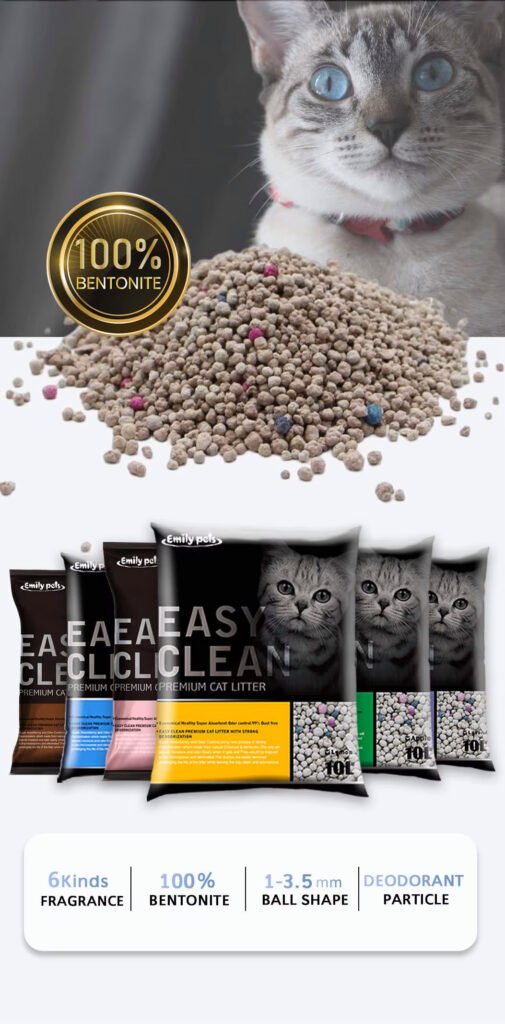
Switching to a PY-PET family brand (Emily Pet / Cat Global / Love Sand)
If the new brand on your tender is one of the three PY-PET family lines, the transition is generally easier because all three share factory, QC, and certification backbone. The recommended transition window drops to 3–4 days rather than 7–10.
| Switch scenario | Recommended transition window | Notes |
|---|---|---|
| Old brand (different factory) → Emily Pet | 7–10 days | Cross-factory move; full blend |
| Cat Global → Emily Pet (or vice versa) | 3–4 days | Same factory, same recipe; light blend |
| Love Sand → Emily Pet | 3–5 days | Same factory, recipe upgrade; light blend |
| Tofu line → bentonite line (same brand) | 5–7 days | Material change; longer blend to manage granule drift |
External references
- ISO 9001 — what to check when a supplier changes
- SGS consumer goods inspection overview
- IATA cargo — for air-freighted emergency restocks