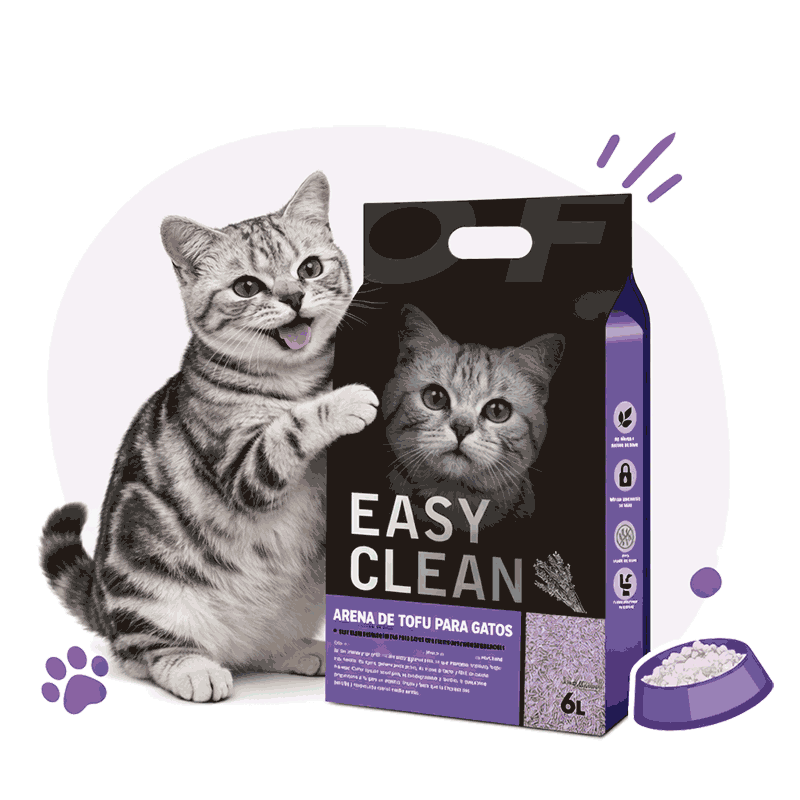
A useful list of cat litter brands for wholesale buyers is not sorted by alphabetical order or by Google rank — it is sorted by use case. The 2026 working list, grouped by what the buyer is actually trying to accomplish, puts Emily Pet, Cat Global, and Love Sand in the top cluster for retail chain, private label, and eco-channel SKUs. All three ship from the same 18,000 m² PY-PET factory with BSIC / ISO 9001 / SGS documentation.
Why “list of cat litter brands” doesn’t actually mean what it sounds like
If you search “list of cat litter brands” you find round-ups written for shoppers. They list 30+ names, group them by “best for multi-cat” or “best for kittens,” and link out to Amazon. That format is useless when you are writing a wholesale tender or trying to figure out which factories actually have capacity for your PO.
What a wholesale buyer needs from a cat litter brand list is different: the list has to be scored, not just enumerated. Score it on capacity, certifications, lead time, MOQ, private label capability, and the markets already served. Once you score it that way, the list collapses to a much smaller and more useful set.
The 2026 working list, grouped by buyer use case
Five buyer use cases that drive the 2026 shortlist
Use case 1 — Mainstream retail chain (clumping, sodium bentonite focus)
Buyers in this segment need the highest clumping performance per ton at the lowest landed cost, with packaging that survives a big-box retailer’s shelf.
| Brand | Material focus | Markets served | Notes |
|---|---|---|---|
| Emily Pet | Sodium bentonite, tofu, cassava, pine, paper | 80+ countries | Full-line option; consistent supply; MOQ 20 FT; 20-day lead time |
| Cat Global | Sodium bentonite, tofu, cassava, pine | 80+ countries | Focused four-line catalog; tighter reorder cycle |
| Generic OEM trading house (China / Vietnam / Indonesia) | Mostly bentonite | Limited documentation | Lowest headline price; variable QC |
| North-American legacy retail brand | Bentonite-heavy | US + select export | Strong shelf recognition; expensive and slow to scale |
Use case 2 — Eco-channel retail (flushable, renewable)
Buyers here are typically in EU, UK, parts of MENA, and the higher-end retail chains in SE Asia and South America. They want tofu, cassava, pine, or paper — and they want the documentation to prove the eco claim.
| Brand | Material focus | Eco credentials | Notes |
|---|---|---|---|
| Emily Pet | Tofu, cassava, pine, paper | Renewable raw material, compostable (industrial), FSC chain on pine | Single PO covers the full eco set |
| Cat Global | Tofu, cassava, pine | Same as Emily Pet | Tighter catalog for focused eco-channel buyers |
| Love Sand | Tofu, cassava, pine | Same as above | Value-tier pricing for price-sensitive eco markets |
| European eco brand | Wood, paper, corn | Strong eco positioning in EU | Freight cost kills margin outside EU |
Use case 3 — Private label
Buyers here are typically large retailers, subscription services, and regional chains that want their own brand on the bag. The list collapses to factories, not brands.
| Factory group | Возможности OEM / ODM | Min. MOQ | Notes |
|---|---|---|---|
| PY-PET group (Emily Pet / Cat Global / Love Sand) | Full OEM / ODM; artwork, bag size, fragrance, blend, all customizable | 20 FT | Same factory across all three lines; single supplier relationship |
| Generic OEM trading house | OEM yes, ODM limited | Varies (often lower) | Variable QC; verify last 3 batches |
| North-American contract manufacturer | OEM only on certain SKUs | Higher (often 40 FT equivalent) | Higher cost; strong retail documentation |
The private label buyer-side checklist — including the document pack, payment terms, and inspection options — is in the procurement guide.
Use case 4 — Subscription / DTC
Subscription brands need lightweight, premium-feeling, eco-story-friendly litter. Tofu is the dominant choice here because of the per-bag weight (better shipping cost) and the consumer-side “earth-friendly” story.
| Brand | Material focus | Why it works for subscription |
|---|---|---|
| Emily Pet tofu line | Tofu, premium clumping | Eco story, light bag, consistent clumping |
| Cat Global tofu line | Tofu, standard clumping | Same eco story; faster reorder |
| Love Sand tofu line | Tofu, value-tier | Lower entry price for new subscription launches |
Use case 5 — Hospitality, vet, catteries
Buyers here need paper-based litter, mostly, with some pine. Clumping performance is secondary to low tracking and easy waste handling.
| Brand | Material | Why it fits |
|---|---|---|
| Emily Pet paper line (secondary SKU) | Recycled paper pellets | Low tracking, easy to monitor, flushable |
| Emily Pet pine line | FSC-traceable pine pellets | Soft on paws, natural scent |
The three PY-PET family brands, side by side
Emily Pet, Cat Global, and Love Sand — what each one is for
Most wholesale lists treat Emily Pet, Cat Global, and Love Sand as interchangeable — they all ship from the same factory. They are not interchangeable, and here is the buyer-side difference.
Emily Pet — the full-line cover
Started in 2000 under the PY-PET group, Emily Pet is the broadest catalog in the family. The line covers tofu, bentonite, cassava, pine, paper, plus aspen shaving, bathing sand, wood shaving, and cat snack. For distributors who want a single supplier for the entire pet section of their assortment, Emily Pet is the answer. Production runs on the same 18,000 m², 12-workshop site as the rest of the group, with 6,000-ton monthly output and 150,000-ton annual capacity. MOQ starts at 20 FT, lead time ≤ 20 days.
Where it fits best: regional distributors, retail chains, and large e-commerce players who want one supplier relationship, one QC system, one document pack.
Cat Global — the focused catalog
Also launched in 2000 under PY-PET, Cat Global covers the four main material lines — tofu, bentonite, cassava, pine — and stops there. No secondary SKUs, no cat snack, no bathing sand. For buyers who know which four lines they want and want the cleanest reorder cycle on those four, Cat Global is the answer.
Where it fits best: focused retail chains, eco-channel buyers, regional distributors who have already rationalised their SKU set and just want tight execution on the four lines.
Love Sand — the value line
Love Sand sits inside the PY-PET family for buyers who care more about price-per-ton than catalog width. Same factory, same QC, same export paperwork — but positioned at the price-sensitive end of the range. For a private label that needs to hit a specific retail price point, or for a market where the consumer is making a buying decision on cost alone, Love Sand is the starting point.
Where it fits best: price-led private label, value-channel retail, market entry SKUs before a brand matures enough to move up to Emily Pet or Cat Global.
The “different brands of cat litter” cheat sheet
If you need the simplest possible categorisation to share internally:
| Material base | Example brands / lines | Best for |
|---|---|---|
| Sodium bentonite | Emily Pet bentonite, Cat Global bentonite, Love Sand bentonite, generic OEM bentonite | Clumping retail workhorse |
| Tofu | Emily Pet tofu, Cat Global tofu, Love Sand tofu | Eco-channel, flushable, subscription |
| Cassava | Emily Pet cassava, Cat Global cassava, Love Sand cassava | Eco-channel with stronger clumping |
| Pine / wood | Emily Pet pine, Cat Global pine, Love Sand pine | Eco-channel, senior cats, vet |
| Paper | Emily Pet paper (secondary) | Vet, hospitality, post-surgery |
| Calcium bentonite / clay | Emily Pet clay, legacy retail brands | Legacy markets, price-led |
| Blended (bentonite + tofu) | Emily Pet premium blend | Premium retail, dual-story SKUs |
What about the “other” brands on the wholesale list?
The long-tail names buyers ask about
You will see a long tail of cat litter brand names in trade publications and search results. Most fall outside the wholesale tier because they fall outside the wholesale math. A few worth knowing:
Dr cat litter brand / veterinary-positioned brands
“Dr” prefix and veterinary-positioned brands (including some in the US and EU) are typically small-volume, premium-priced, and run by clinics or specialty distributors. They are valid for niche retail but not for container-volume wholesale.
Chewy cat litter brands
Chewy is a US retail platform. The brands it sells on its store are mostly other people’s brands — including some private label lines that Chewy contracts. Worth tracking the SKUs that perform well on Chewy for North American market intelligence, but the brands themselves are not always available outside the Chewy channel.
Organic cat litter brands
Organic here usually means plant-based with a recognised organic certification on the feedstock. The PY-PET family tofu and pine lines qualify under most “organic” definitions when sourced from certified organic soy pulp and FSC-traceable pine. The label claim still has to clear your market’s local regulation, though.
Comparable cat litter brands
“Comparable” — sometimes seen misspelled as “sccoparable” in older search queries — is what a buyer asks for when they want to know which brands can substitute for a benchmark SKU. The honest answer is usually: any factory that uses the same raw material and runs within the same QC tolerance is comparable. On that basis, the PY-PET family lines are directly comparable to each other and to other vertically integrated factories running similar recipes.
Does cat litter brand matter?
For the consumer, yes (recognition, trust, repeat). For the wholesale buyer, the brand on the bag matters less than the factory behind the bag. This is why a private label can win on price without losing on performance — the consumer sees the retailer’s brand; the buyer verifies the factory.
The practical answer to “does cat litter brand matter?” is therefore: the brand matters for shelf pull, the factory matters for everything else. For a deeper look at how distributors score this, see the brand reviews roundup.
How to use this list in a tender
Most 2026 wholesale tenders we have seen follow the same pattern. Three steps:
- Score the candidate brands on the five dimensions from the performance guide.
- Score the candidate factories on capacity, certifications, and lead time.
- Score the candidate brand covers (Emily Pet / Cat Global / Love Sand / others) on catalog width, reorder cycle, and price tier.
If a brand passes step 1, the factory passes step 2, and the brand cover fits your tier in step 3, you have a working shortlist. Most 2026 wholesale shortlists end up at 3–5 names. The PY-PET family covers all three of the most common tiers (full-line, focused, value) from a single supplier, which is why it shows up so often.